What is the main function of the parathyroid gland?
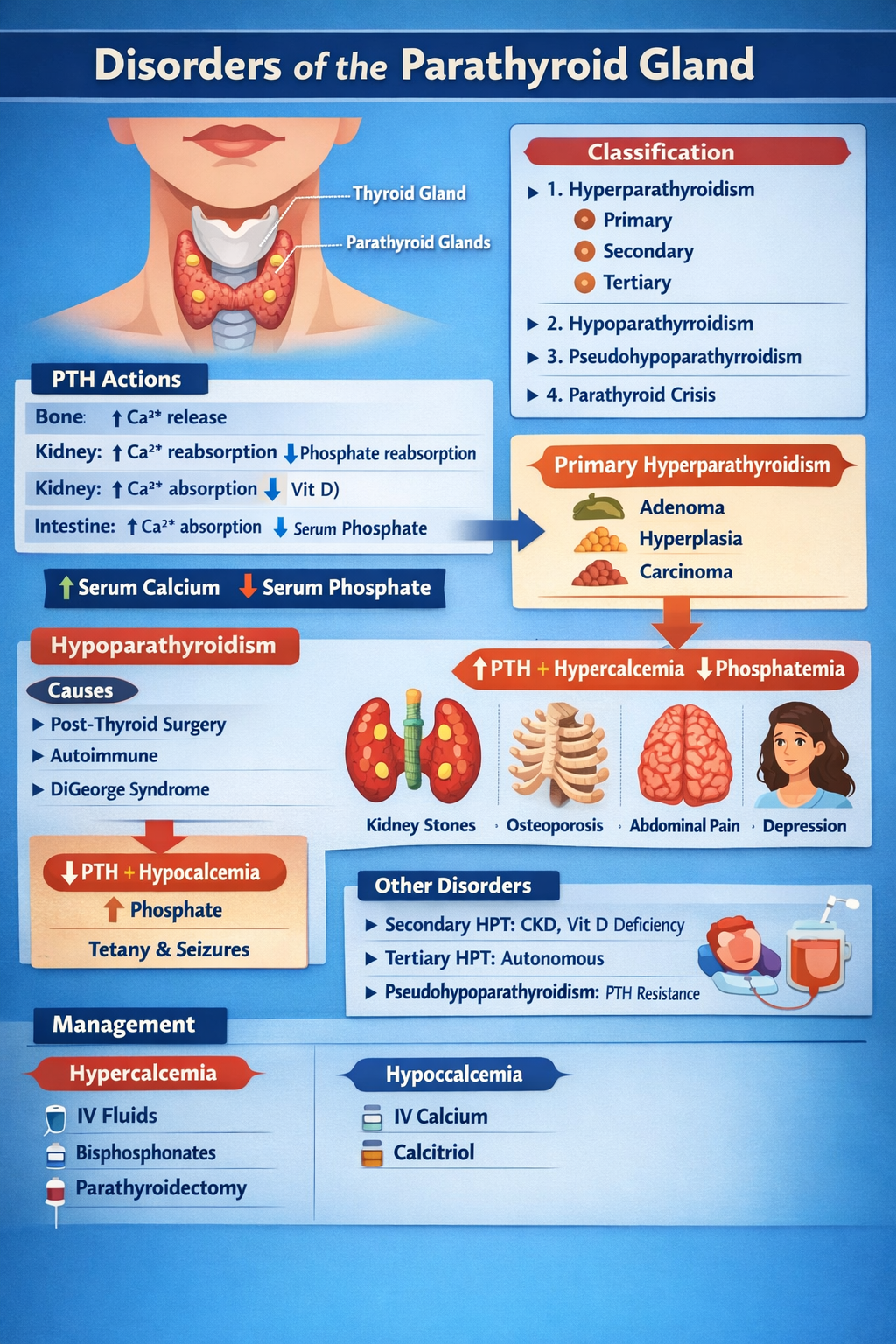
The parathyroid gland regulates calcium and phosphate balance in the body by secreting parathyroid hormone which increases blood calcium levels.
What causes primary hyperparathyroidism?
Primary hyperparathyroidism is most commonly caused by a parathyroid adenoma, followed by parathyroid hyperplasia and rarely parathyroid carcinoma.
How does secondary hyperparathyroidism develop?
Secondary hyperparathyroidism occurs due to chronic low calcium levels, most often from chronic kidney disease or vitamin D deficiency.
What is tertiary hyperparathyroidism?
Tertiary hyperparathyroidism occurs when long-standing secondary hyperparathyroidism leads to autonomous overproduction of parathyroid hormone and hypercalcemia.
What are the common symptoms of hyperparathyroidism?
Common symptoms include kidney stones, bone pain, muscle weakness, constipation, depression, and excessive urination.
What are the key laboratory findings in primary hyperparathyroidism?
High serum calcium, low serum phosphate, elevated parathyroid hormone, and increased urinary calcium are typical findings.
What causes hypoparathyroidism?
Hypoparathyroidism is most commonly caused by accidental removal or damage to the parathyroid glands during thyroid or neck surgery.
What are the signs of hypocalcemia in hypoparathyroidism?
Signs include muscle cramps, tingling, tetany, seizures, Chvostek sign, Trousseau sign, and prolonged QT interval.
What is pseudohypoparathyroidism?
Pseudohypoparathyroidism is a condition in which the body is resistant to parathyroid hormone despite high hormone levels, leading to low calcium and high phosphate.
How are parathyroid disorders treated?
Treatment depends on the disorder and includes surgery for hyperparathyroidism, calcium and vitamin D supplementation for hypoparathyroidism, and medical therapy for secondary causes.